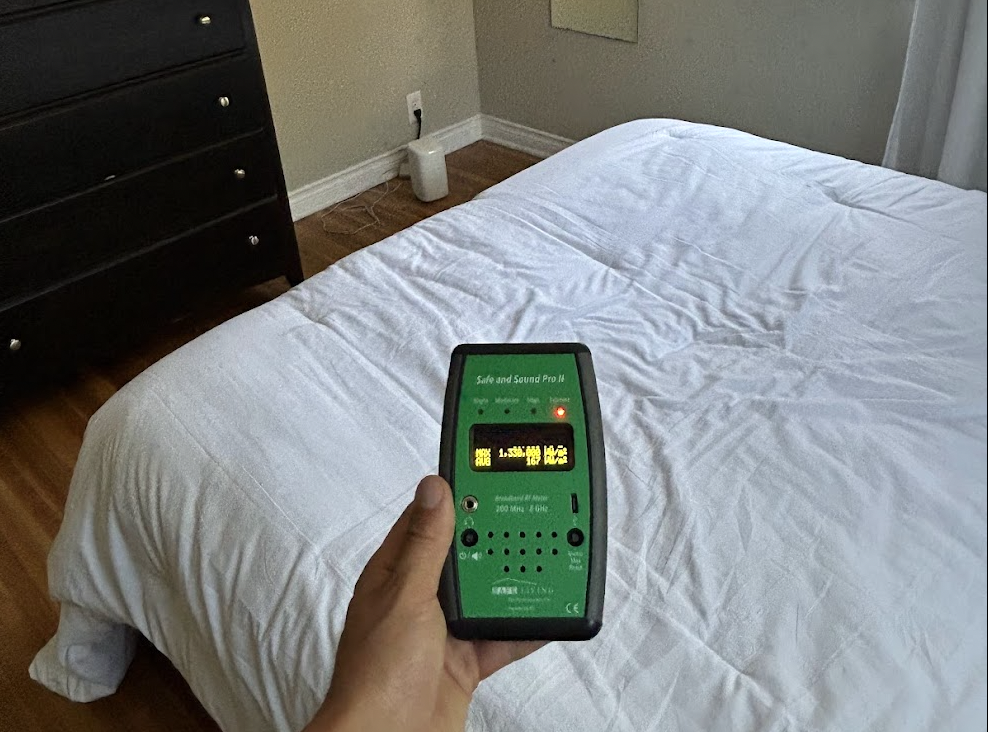
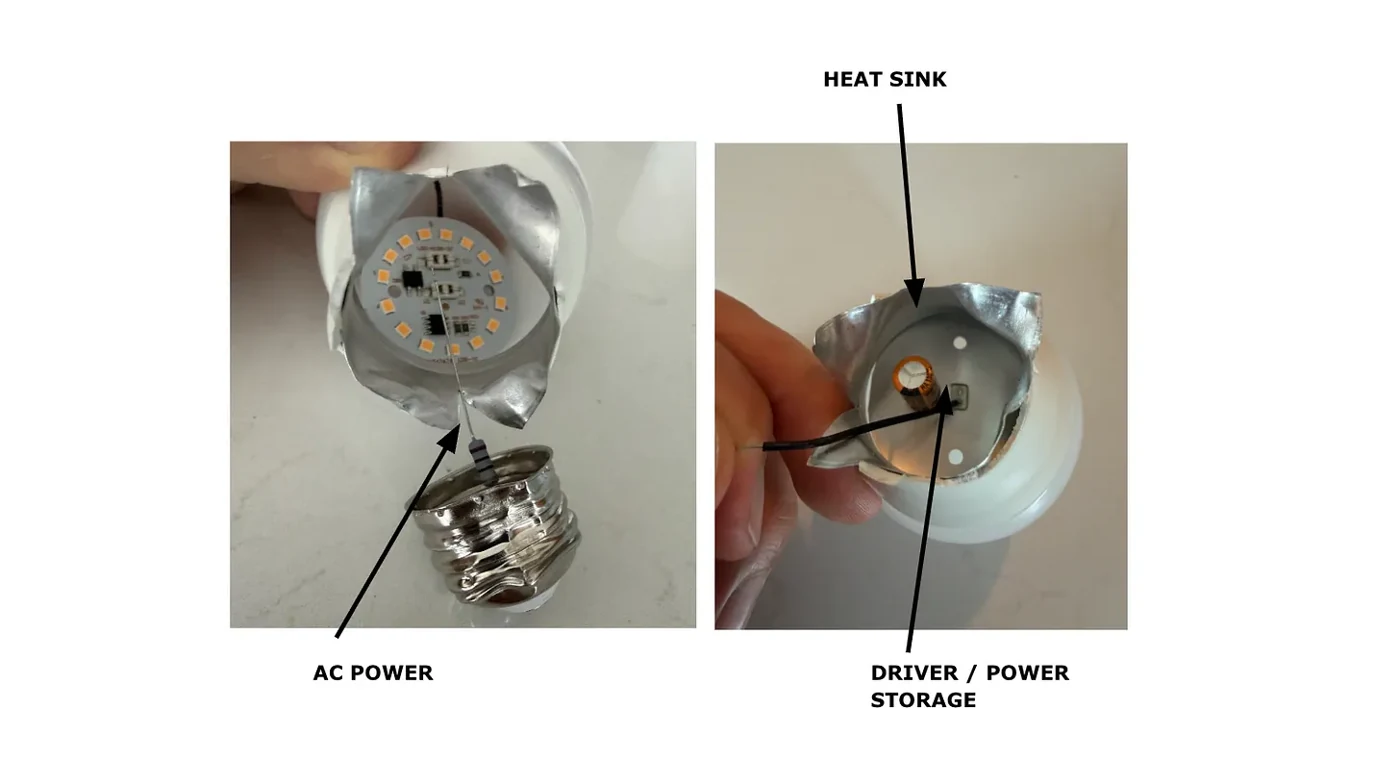
TLDR: This is a long post. But if you ever wondered about EMFs and wanted to dive into the crazy controversies over their impacts on our health, then I think it’s worth it!
You are an electrical being.
Your body is constantly generating, transmitting, and responding to electrical signals.
Your heart beats because specialized cells generate an electrical impulse.
Your brain communicates through electrical signals traveling along neurons.
Your muscles contract when electrical signals trigger the release of calcium inside muscle cells.
And your senses turn the outside world into electrical information. Light hitting your eyes, sound entering your ears, and pressure on your skin are all converted into signals your nervous system can interpret.
Underneath all of this is a remarkably simple idea: cells maintain tiny electrical differences across their membranes by controlling the movement of charged particles.
My wife works in an electrophysiology (EP) lab, which treats electrical problems in the heart. When someone’s heart rhythm is off, they deliver a controlled electrical shock to reset it. They can thread a catheter into the heart and intentionally destroy a tiny patch of tissue that is generating abnormal electrical signals.
It is incredible!
So let’s back up and start here. What are EMFs?
At a basic level, an electromagnetic field is an invisible physical field made up of electric and magnetic forces that surround and act upon electrically charged particles.
It is best understood on a spectrum.
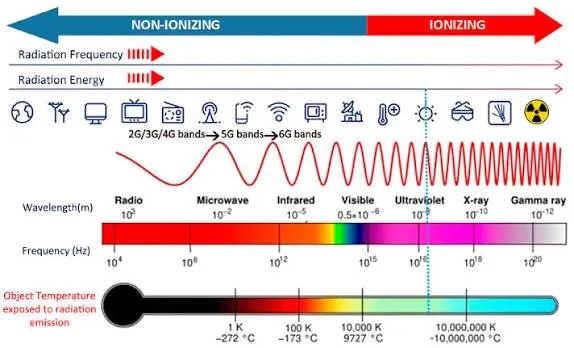
The electromagnetic spectrum is the full range of electromagnetic radiation, organized by frequency and wavelength. It includes radio waves, microwaves, infrared, visible light, ultraviolet, X-rays, and gamma rays. Each behaves differently and interacts with matter in different ways.
And importantly, electromagnetic fields aren’t something humans invented.
They occur naturally and are also produced by human-made technologies.
Natural sources include the Earth’s magnetic field, sunlight, lightning, and even that electrical activity within our own bodies.
Human-made sources include power lines and electrical wiring, radio and television broadcasts, Wi-Fi routers, cell phones, Bluetooth devices, microwave ovens, and medical technologies such as X-rays.
So when we talk about “EMFs,” we’re actually talking about an enormous category of physical phenomena, from the Earth’s magnetic field to visible light to the signal traveling between your phone and a cell tower.
So where does the debate begin?
A major dividing line is ionizing versus non-ionizing radiation.
Specifically, how much energy the radiation carries and what it can do to biological tissue.
Ionizing radiation has enough energy per photon to remove electrons from atoms and molecules. This can damage cells and DNA and, at sufficient exposure, increase cancer risk.
We know the health risks of ionizing radiation. The question centers around the health risks of non-ionizing radiation.
Non-ionizing radiation does not carry enough energy per photon to ionize atoms or directly break chemical bonds. But that doesn’t mean it can’t interact with our bodies.
There are two broad categories of effects worth understanding.
The first is thermal heating.
At sufficiently high intensities, certain forms of non-ionizing radiation can be absorbed by tissue and converted into heat.
A microwave oven is an obvious example. Microwave-frequency electromagnetic fields cause energy to be absorbed by food, producing heat.
Excessive heating can damage tissue. Proteins can lose their normal structure, enzymes can stop functioning properly, cell membranes can be disrupted, and at sufficiently high temperatures, cells can be injured or die.
But our bodies are very good at regulating temperature.
The second is non-thermal biological effects.
This is where much of the EMF debate actually lives.
Researchers have asked whether electromagnetic fields could influence biological processes at exposure levels that don’t appreciably heat tissue.
One proposed pathway is oxidative stress. Our cells naturally produce molecules called reactive oxygen species, or ROS. ROS aren’t inherently bad. In appropriate amounts, they are part of normal metabolism, immune function, and cellular signaling.
The problem occurs when the production of reactive oxygen species exceeds the body’s antioxidant defenses. That’s oxidative stress. When sustained, oxidative stress can damage proteins, fats, and DNA and interfere with normal cellular function.
Welcome to the controversy.
You can find studies suggesting biological effects.
You can find other studies finding nothing.
You can find animal experiments that look concerning and epidemiological studies that look reassuring.
You can find scientists who believe non-thermal effects deserve considerably more attention and scientists who believe the evidence to date doesn’t demonstrate a meaningful health risk at normal exposure levels.
So why are the results so different?
Part of the answer is that EMF isn’t one exposure.
Frequency matters. Power matters. Distance matters. Duration matters. Modulation matters. Whether exposure is continuous or intermittent matters. The tissue being studied matters.
And then all the normal problems make biological research difficult: small studies, poor controls, inadequate blinding, inconsistent dosimetry, publication bias, and findings that fail to replicate.
This is why I don’t think it’s useful to grab one scary study, or one reassuring study, and declare the debate over.
And even the institutions responsible for setting our exposure standards have had to wrestle with that uncertainty.
So what about the regulating bodies, the FCC?
The FCC’s current radiofrequency exposure limits have their roots in standards the agency adopted in 1996. In 2019, after reviewing whether those limits should be changed, the FCC decided to retain them.
But in 2021, the U.S. Court of Appeals for the D.C. Circuit ruled that the FCC had not adequately explained portions of that decision.
The court specifically directed the FCC to better address issues including the potential health implications of long-term RF exposure, effects on children, the enormous increase in wireless devices and technological changes since the original standards were adopted, and evidence concerning effects unrelated to cancer.
And how about the electromagnetic hypersensitivity (EHS) population?
This is a group of people (roughly ~4% of the world in the latest surveys) who report experiencing symptoms around wireless devices or other electromagnetic fields.
Reported symptoms can include headaches, fatigue, difficulty concentrating, dizziness, tingling or burning sensations, sleep problems, and heart palpitations.
It is crazy that such a large population can have these types of symptoms from EMFs.
However, researchers have not been able to tie the specific cause.
OK.
So non-ionizing radiation has two types of impacts (thermal & non-thermal) that are in question. And there is research to support both sides and link to negative biological impacts or no biological impacts. But it is hard to find strong, repeatable, large studies. And the current governing standards seem out of date.
Wow.
So where do I land?
Actually, there is one last concept worth knowing.
The inverse-square law.
For a radiating source in the far field, the intensity of the radiation decreases roughly in proportion to the square of your distance from the source.
In simpler terms:
Double the distance → roughly ¼ the power density.
3× the distance → roughly ¹⁄₉ the power density.
10× the distance → roughly ¹⁄₁₀₀ the power density.
Why?
As electromagnetic energy travels away from a source, it spreads out over an increasingly large area. The farther away you are, the less of that energy reaches a given area.
This is why distance can be such a powerful tool when thinking about EMF exposure.
So what is my stance?
My view is the same one I hold on a lot of poorly characterized risks: when something is plausibly harmful, cheap to reduce (distance, reorganizing, and upgrading), and offers no real downside to reducing, I just do my best to try and reduce it.
And I think of this as the overflowing bucket. We have lots of everyday stressors, and while one may not impact our body, the total load of them may cause us to “overflow” and negative health impacts to come to light. If I can reduce or remove one of the stressors, all the better.
Especially removing them in my sleeping area, where my body wants to rest and recover.
Now here is what I would do.
It is simple. Find the everyday objects in our homes that have the highest signal strength and move them as far away from the places where I spend the most time (bedroom & home office).
Deal with the smart meter first. The utility meter on your outside wall is one of the higher-powered RF sources on the property, and about 10% of its emission comes out the back, into whatever room is on the other side of that wall. It doesn’t transmit constantly (most fire off in short bursts, seconds of airtime a day), but those short spikey bursts can be the most intense. My rule of thumb here is 20 feet away from any bedroom. If not, consider requesting an analog opt-out from your utility. In most states, you can pay a little more to have the analog version (and have the meter-reader person come out monthly).
Then the wifi router. This has the second-highest intensity, especially if you upgraded to “faster speeds.” My rule of thumb is 20 feet from any room you spend lots of time in (bedroom, office, living room). So put it in the basement if you can, or the garage. And put it on a kill switch where you can turn it off at night; you can buy some with automatic timers too. Even better would be to hardwire everything with Ethernet cable.
Then get your phone out of the bedroom. We are already on our phones most of the day. I am not here to say get rid of the phone. My stance is this. Most people probably charge their phone right on the nightstand next to their head. Just keep the phone out of the bedroom to charge. I keep my phone downstairs in the kitchen at night. Also keeps me off of it at night, and when my alarm goes off, I have to actually get up out of bed to turn it off. Triple-win. This goes for other things with Bluetooth and wifi connection like baby monitors, alarm clocks, etc.
Move power strips and chargers away from your body. This may surprise some people, but I find that the electric fields from a cheap power strip are the strongest EF sources I find in the house. And they are normally placed right under the desk by our feet, beside the bed. No power strips are my recommendation. It is also a good exercise to remove devices that are unneeded.
Say no to smart appliances where you have the choice. Every “smart” fridge, washer, and thermostat adds a wifi module transmitting continuously for a feature you’ll use twice. I like older, dumber appliances.
Finally, if you were wondering, I don’t really believe in shielding.
The shielding industry (canopies, paints, fabrics) works by reflecting fields away, and reflection cuts both ways. If any transmitting device ends up on the wrong side of the shield, you’ve built a little echo chamber that concentrates exposure instead of removing it. It’s also expensive.
I hope you found that helpful and interesting,
Hunter
We built a bunch of FREE resources for you!
- Take our home health quiz (~5 min)
- View a recent home assessment report
- Try out our indication guide to lead pipes
- See your radon risk with our Minnesota radon map
- Calculate what the best air purifier is for your home from our database
- Schedule a free 15 minute chat with our founder about any questions you have