

Hello from Manuel Antonio, Costa Rica. Pura Vida!
Last night, we had a local Chef, Rosita, cook us dinner in our Airbnb. The Mahi Mahi with mango salsa was delightful. We learned about local traditions. We had great conversations sharing memories. And I smoked the family in dominos. One of the best nights of our trip.
There is something meaningful about a home cooked meal. Something that brings us together!
So naturally, let’s talk about the kitchen.
*****
Think about your kitchen for a second. It’s probably where your family congregates at the start and end of everyday breakfast and dinner, where guests end up at every party, and maybe even where you wander late at night for a sweet treat. It’s the centerpiece of our homes.And the foods we eat and the way we prepare those meals have a major impact on our health and wellness.
*****
History of the kitchen.
For most of human history, there was no “kitchen.” There was just an open fire in the middle of the main room that did everything from cooking to heating to lighting the home. This was still the norm up until around 1830, when cookstoves finally became accessible to ordinary families. Once families had a dedicated stove, the fireplace moved to the living room and the kitchen became its own functional space for the first time.
In 1926, Margarete Schütte-Lihotzky designed the Frankfurt Kitchen, a compact, efficient space for preparing meals and it went on to be installed in over 10,000 homes, becoming the foundation of the modern fitted kitchen.
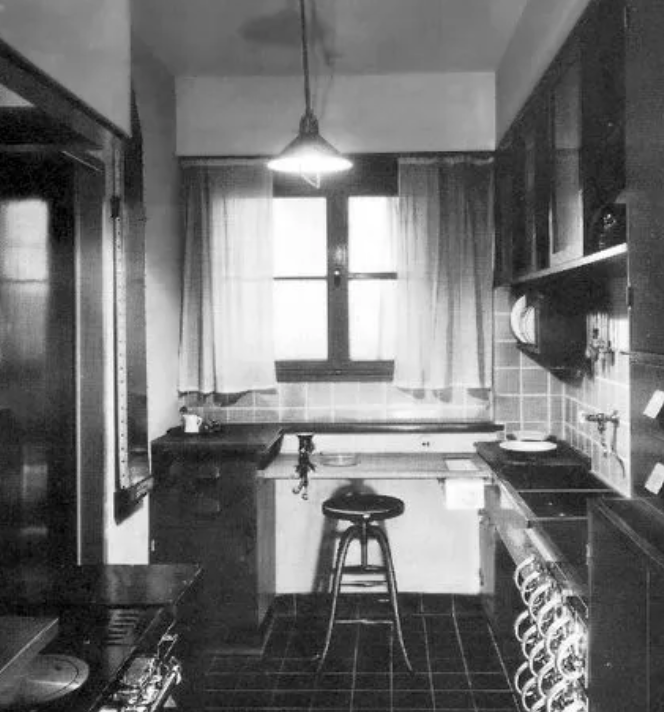
Then somewhere along the way, function gave way to form. By the 2000s, kitchens started growing more spacious, residents began adding personal touches. Today the kitchen is the most renovated room in the house!
*****
The Design.
Let’s start with how to design a functional and inviting kitchen. There’s a concept called the “kitchen work triangle,” it describes the relationship between your three main work zones: the refrigerator, the sink, and the stove. The idea is that if you connect those three points, you get a triangle, and the efficiency of your kitchen is determined by how that triangle is shaped.

The gold standard: each side of the triangle should be between 4 and 9 feet, and the total of all three sides should land somewhere between 12 and 27 feet. Too tight and it’s cramped. Too spread out and you’re logging serious mileage just making dinner. The layout type matters too: galley, L-shaped, U-shaped, and island kitchens all create different triangle dynamics.
The Airbnb I am currently staying in has a nice large island and functional triangle.

If you’re ever renovating, keep the triangle in mind. An efficient kitchen makes it more enjoyable to prepare meals!
*****
Lighting.
Lighting in the kitchen serves two goals: task and ambiance. And most kitchens don’t do both well.
The Illuminating Engineering Society (IES) and the National Kitchen & Bath Association (NKBA) recommend a minimum countertop light level of ~850 lux for preparing and cooking food. For general kitchen overhead lighting, ~350 lux. A well lit kitchen improves the safety and ambience.
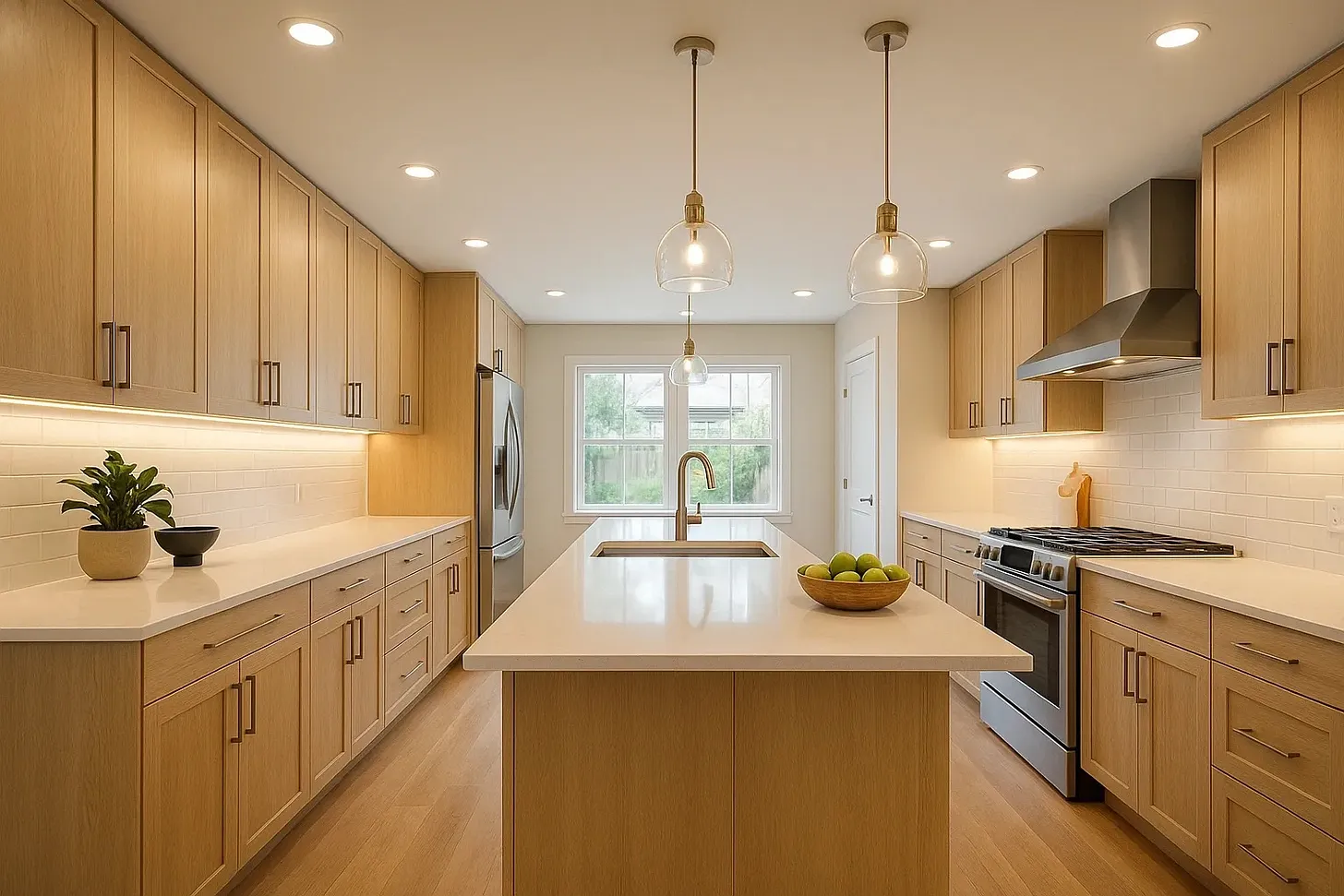
Good kitchen lighting is layered.
Ambient (the base). This is your general room illumination, recessed ceiling lights or flush mounts. It sets the overall brightness and mood of the space. Most kitchens have this covered. You want this warm (2700k), zero-flicker, and moderate intensity. I think incandescent work great.
Task. Recessed ceiling lights is a great base, but can cast shadows on food prep area like your counters. The fix is under-cabinet LED strips, positioned 8-12 inches from the front edge of your upper cabinets. They light up the workspace directly and eliminate the shadow problem entirely. I like 3000k soft white with higher intensity for these lights.
Accent. Pendants over an island, in-cabinet lighting behind glass doors. This layer is decorative, but also gives you a dimmer, gentler option for evening use when you don’t need the full task lighting.
*****
Appliances.
The refrigerator and freezer. Keep your refrigerator at or below 37°F and your freezer at 0°F. Meat on the bottom, below fruits and vegetables. Important for food safety.
These appliances are a notable source of electromagnetic fields (EMFs), particularly the motors inside them creating a magnetic field. If you have your fridge positioned against a wall that backs up to your bedroom or a place where someone sleeps, it’s worth knowing that the EMFs from motors are strongest directly around the appliance and drop off significantly with distance. 10 feet of separation is my rule.
Microwaves are common, quick, and do emit microwave energy. In rare cases they can leak small amounts of radiation. My honest take: the microwave is pretty handy and the risks are relatively low if you’re not standing directly in front of it while it runs. Distance is your friend. I still use ours. But I don’t hover over it. Never heat food in plastic in the microwave!
The stove. Gas stoves are one of the more significant indoor air quality issues in homes. Natural gas and propane burning appliances produce nitrogen dioxide (NO2) and carbon monoxide (CO) as combustion byproducts, and research increasingly shows that even low-level, chronic NO2 exposure has negative effects on the human central nervous system. Studies have linked gas stove use to elevated rates of childhood, and California and Colorado are in the process of requiring warning labels on gas stoves.
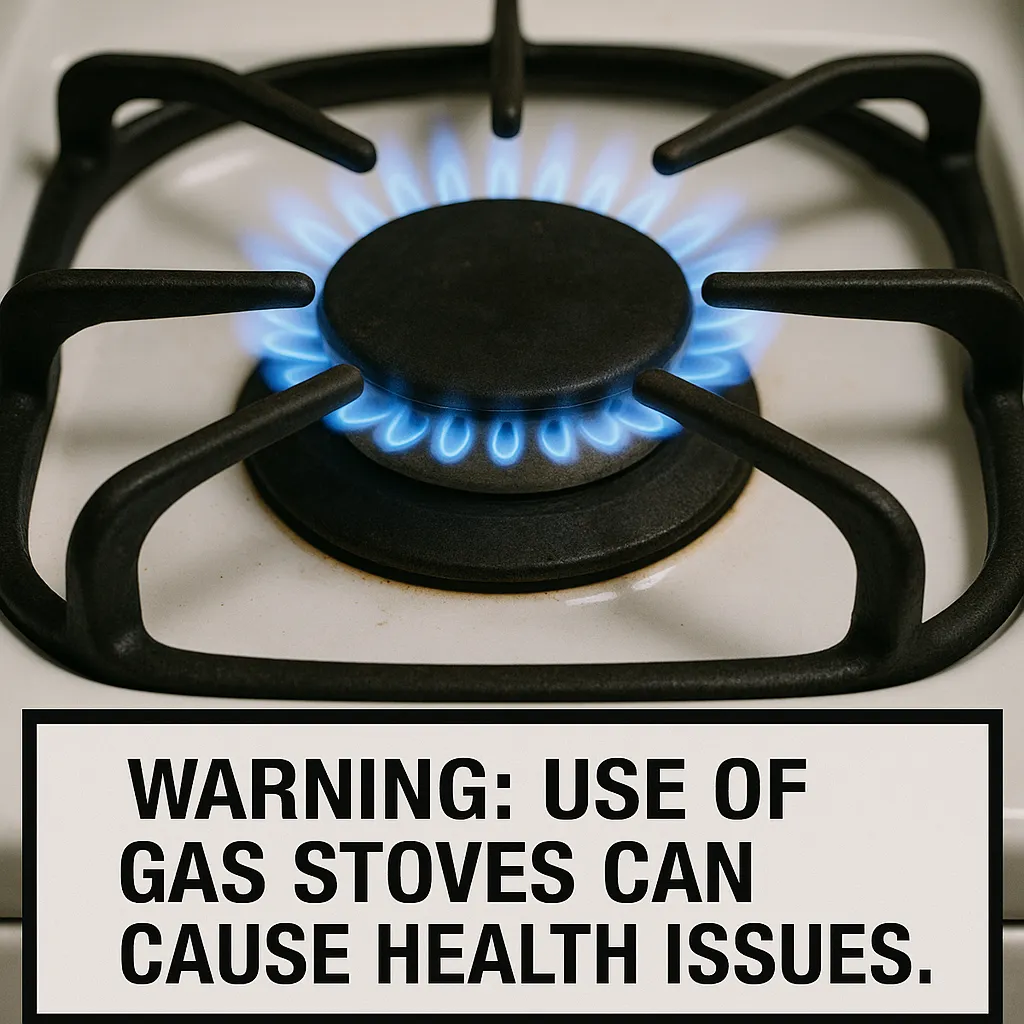
I know people love cooking on gas. I get it. I have one in our house. If you cook on one, the most important thing you can do is use your range hood exhaust when you cook and ideally make sure it actually vents outside rather than just recirculating air through a filter. A lot of range hoods do the latter, which just throws the PM right back at you.
The better alternative for most people? Induction cooktops. They heat fast, they’re precise, and they’re easy to clean. The EMFs from induction are real but localized, they drop off sharply within a few inches of the surface and are not an issue at normal cooking distances.
*****
Water.
I am working on a deeper dive on tap water, but the kitchen is where you utilize a lot of water. You’re cooking with it, drinking it, washing produce in it.
The only way to know what’s in your water is to test it. A good starting place if you are municipal water is to lookup your utilities annually consumer confidence report. They are easily accessible on EWG’s website.
But for most homes, a solid under-sink reverse osmosis filter addresses the widest range of contaminants from disinfection byproducts like trihalomethanes, heavy metals like lead, PFAS compounds, and more. An RO system can run from $500 for a quality under sink unit with remineralization to $10,000 for a whole home unit + installation by a plumber, and filter replacement is typically $50-100/year. We have an under sink system for drinking, cooking, washing food.

*****
Cookware and utensils.
The goal here is to reduce potential chemicals that could leach into food.What to avoid:
- Nonstick (PTFE/Teflon) cookware: These coatings are made with perfluorooctanoic acid (PFOA) and related fluoropolymers. When heated, they release fumes and, over time with wear, particles into your food.
- BPA and BPS in plastic: BPA-free doesn’t mean chemical-free. BPS and BPF are common replacements and early evidence suggests they’re not clearly better. Avoid heating food in any plastic container.
- Aluminum cookware: low-level leaching, particularly with acidic foods. Not a crisis, but worth knowing.
What to use instead:
- High-quality stainless steel: look for 100% stainless without cheaper alloys that may contain nickel.
- Cast iron: if seasoned properly, these are my top choice. Never use soap, and dry thoroughly to prevent rust.
- Glass and stoneware: for storage and baking, hard to beat. No leaching, easy to see what’s inside.
- Porcelain and ceramic: look for lead and cadmium-free glazes and check the manufacturer’s documentation.
- Wooden cutting boards, properly dried. Stand them upright, don’t stack flat.For utensils: wooden or stainless. Ditch the plastic spatulas that are melting against your hot pan edge.
*****
Keeping it clean.
The kitchen sink is one of the most bacteria-laden surfaces in your home. Studies consistently show kitchen sinks contain more bacteria per square centimeter than bathroom surfaces, including Salmonella, E. coli, Staphylococcus aureus, and Campylobacter.
Kitchen rags and sponges can fester bacteria…I think it’s best to switch to paper towels. Disinfect your sink weekly and scrub the rubber stopper and inside the disposal (ice, dish soap, hot water, run).
*****
I’m continuously learning and refining all of this. Hit reply and let me know what you’ve done in your kitchen!
Wishing you delicious and healthy meals,
Hunter


