
Some interesting stats…
- We drink 450,000 cups of water in our lifetime.
- We spend the equivalent of 160 days in the shower over a lifetime
- 71% of us drink water straight from the tap.
- Much of our U.S. tap water delivery infrastructure was built in the early 1900's
- Over 95% of US water systems tested exceeded safe limits for at least 1 carcinogen
- Federal Limits for contaminants in tap water are often 10-100x higher than recommended health guidelines
*****
The science. What water does in your body.
Every cell you have runs on water. Nutrients dissolve in it, waste products get carried out by it, and hormones and signals travel through it. Your blood is about 90% water. Your brain is 75%. Even your bones are 30%.
Here’s the short list of what water is actively doing at any given moment:
- Temperature regulation: Sweat is water. Without it, your core temperature spikes.
- Nutrient transport: Vitamins, minerals, and glucose get to your cells with water as the delivery vehicle.
- Waste removal: Your kidneys filter about 200 liters of blood per day. Water is what carries the waste out.
- Joint lubrication: Synovial fluid is primarily water. Chronic dehydration accelerates joint wear.
- Cellular reactions: Virtually every enzymatic process in your body requires water as a medium or reactant.
- Cognitive function: A 2% drop in hydration measurably impairs concentration, short-term memory, and reaction time.
*****
How Municipal Water Treatment Works.

Source: municipal water starts at either a surface water source (lakes, rivers, reservoirs) or groundwater (underground aquifers). The source matters because it determines the starting contaminant profile.
Surface water picks up whatever is upstream: agricultural runoff, industrial discharge, and increasingly, PFAS “forever chemicals” from surrounding land use. Groundwater tends to carry naturally occurring threats such as arsenic, nitrates, and even dissolved radon, depending on the region's geology.
Treatment Facility: once water is pulled from the source, it goes through several stages before it’s considered safe to distribute.
- Coagulation and flocculation: Chemicals are added to make fine particles clump together
- Sedimentation: Those clumps settle to the bottom of large tanks
- Filtration: Water passes through sand and other media to remove remaining particles
- Disinfection: Chlorine or chloramine is added to kill pathogensThat last step, disinfection, is where treatment creates its own set of problems. More on that shortly.
- Distribution Pipes: treated water leaves the plant and travels through a network of pipes to your home.
*****
Some things to consider.
Treatment works. U.S. municipal water is dramatically safer than unregulated water. But “works” and “complete” aren’t the same thing.
Getting contaminants from 90% removed to 99.9% gets exponentially more expensive. I believe the EPA’s legal limits are based on what’s feasible across 150,000 utilities, not what’s optimal for your body.
Then there’s the distribution problem. The average U.S. utility pipe is 45 years old. Many cities still have lead service lines running from the main to individual homes. Water can leave the treatment plant clean and pick up lead or copper from aging service lines on the way to your tap. The industry’s fix is orthophosphate, a compound added to finished water that coats the inside of pipes and creates a barrier between the water and the pipe material. It works reasonably well. But it’s a coating on a lead pipe, not a replacement for one.
*****
For the nerds. Let’s dive into the different types of chemical compounds in tap water.
Microbiological Contaminants: bacteria, viruses, and parasites are what the whole treatment system is fundamentally designed to eliminate. Pathogens like E. coli, coliform bacteria, Giardia, and Cryptosporidium can cause serious gastrointestinal illness, and in immunocompromised individuals, severe or life-threatening infection. The safe level here is zero detectable pathogens, and for the most part, U.S. municipal treatment achieves that. Waterborne disease outbreaks are rare because disinfection works.
Heavy Metals: lead, arsenic, mercury, cadmium, and hexavalent chromium are the main offenders in this category. They can cause bladder, lung, and skin cancer, as well as neurological damage, depending on the metal and duration of exposure. Lead is the most prevalent concern in older cities. It’s neurotoxic, there is no safe level for children, and it doesn’t come from the treatment plant; it enters from the service lines and plumbing on the way to your tap.
Disinfection Byproducts (DBPs): when chlorine reacts with naturally occurring organic matter in water, it forms a class of compounds called disinfection byproducts (DBPs). The two main groups are trihalomethanes (TTHMs) and haloacetic acids (HAAs). Long-term exposure to DBPs is associated with increased risk of bladder cancer, adverse birth outcomes, and other health issues.
PFAS (”Forever Chemicals”): PFAS are a family of thousands of synthetic chemicals that can get into the water system and are hard to remove with the normal treatment process. They bioaccumulate over time, and chronic exposure is linked to immune suppression, increased cancer risk, endocrine disruption, and liver damage.
Nitrates: nitrates enter water primarily through agricultural fertilizer runoff and wastewater. They’re particularly dangerous for infants as high nitrate exposure can interfere with the blood’s ability to carry oxygen, a condition called methemoglobinemia.
Microplastics: particles under 5mm, enter water systems from degraded plastic waste, synthetic textiles, cosmetics, and industrial sources. They’ve been detected in tap water, bottled water, and human blood. Microplastics act as carriers; they bind to heavy metals, persistent organic pollutants, pesticides, pharmaceuticals, and microorganisms, potentially concentrating and delivering those contaminants together. Research on health effects is ongoing, with early findings pointing to inflammation, cellular damage, and endocrine disruption.
*****
One more thing. Drinking vs. Bathing are two different problems.
Most people think about water quality in the context of drinking. But your shower is a significant exposure route too, and for a different reason.
When you shower in hot water, DBPs vaporize. You inhale them. They also absorb transdermally through your skin. Some research suggests shower and bath exposure to chloroform and other volatile DBPs may actually exceed drinking exposure for certain contaminants, due to the combination of heat, steam, and skin surface area.
Alright, so we know the importance of water, the treatment process today, common chemicals, and their health impacts. Now, how do we test and get clean water…
*****
What to Do About It.
The good news is that it is fairly straightforward to take the steps I would take to get clean water.
1. Look up your utility to figure out what you are dealing with.
Utilities are required to report annual consumer confidence reports, where they detail all of the contaminants found and exact levels. I love to use the EWG Tapwater Database to look up water quality because all you have to do is enter your zip code, and it will show you exactly what chemicals are high compared to their independent (and strict) health guidelines.
I looked up a utility near me, the Saint Paul Regional Water Service. There are all the chemicals that are over the limits EWG recommends…wow!
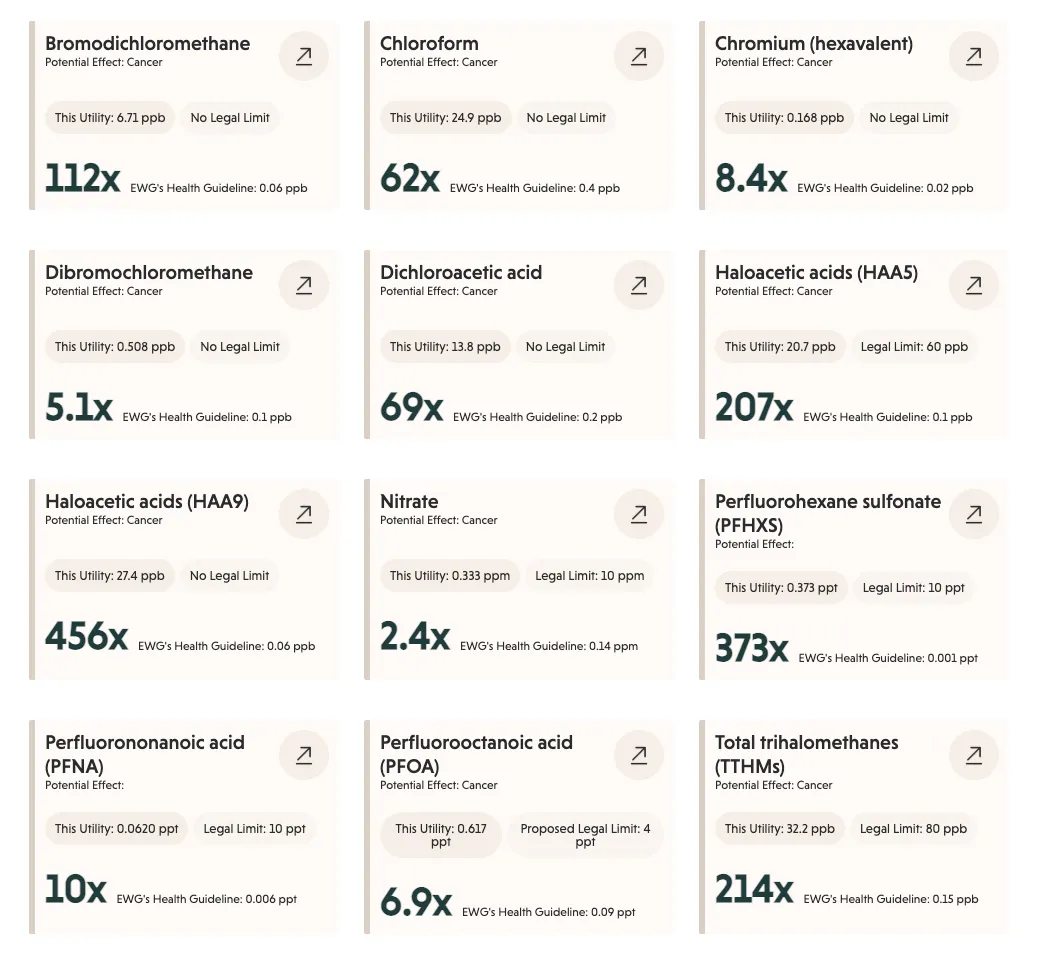
Alright, so I just scared you a bit.
2. Test at the tap & shower.
The utility data above gives us a good sense of the water leaving the treatment plant. However, it doesn’t tell you what’s coming out of your specific faucet, as it can pick up other contaminants through the distribution pipe network. I would test your kitchen and then the primary bathroom (remember drinking vs bathing is a different problem).
Another reason to test…some utilities, like Saint Paul Regional Water Service, still have lead pipes in the distribution network, it is critical to make sure you are not picking up lead or other contaminants.
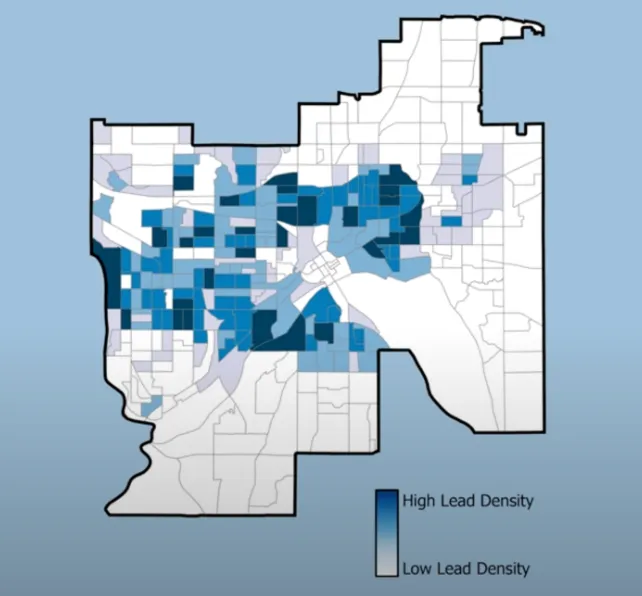
Alright, now you are probably very scared….sorry….the good news is here now, as there are filters that can remove all of these contaminants!
3. Make your filter decision based on what you find
Different filters target different contaminants. Here’s the practical breakdown:
- Reverse osmosis (under-sink): The most comprehensive option for drinking and cooking water. Removes DBPs, heavy metals, nitrates, PFAS, and most everything else. However, it is the most expensive as it has a lot of wastewater and filters need to be replaced yearly. Runs $500-2,000.
- Activated carbon (pitcher or faucet-mount): Good for DBPs, chlorine, and some other contaminants. More affordable and easier to maintain. Not effective for heavy metals, nitrates, or PFAS. Runs $150-500.
- Shower filter: Carbon-based shower filters reduce chlorine and some volatile DBPs. Not as comprehensive as drinking water RO, but meaningful if you’re concerned about inhalation exposure. Runs $100-300.
- Whole-house system: Treats all water entering the home — drinking, bathing, laundry. More expensive ($5,000-20,000) and requires maintenance. Makes sense if lead pipes are a confirmed issue throughout the home or if you want whole-home DBP reduction.
Now I can’t tell you the optional filter combination, but it makes sense to test to know exactly what contaminants have the highest concentration in your water and then find the filters that remove those specific ones.
In my home, I have an undersink reverse system for all of our drinking, cooking, and fruit/vegetable washing water. Then I have a carbon shower filter in the main bathroom. In the future, I would like to invest in a whole-home system, but this gives us sufficient coverage for now.
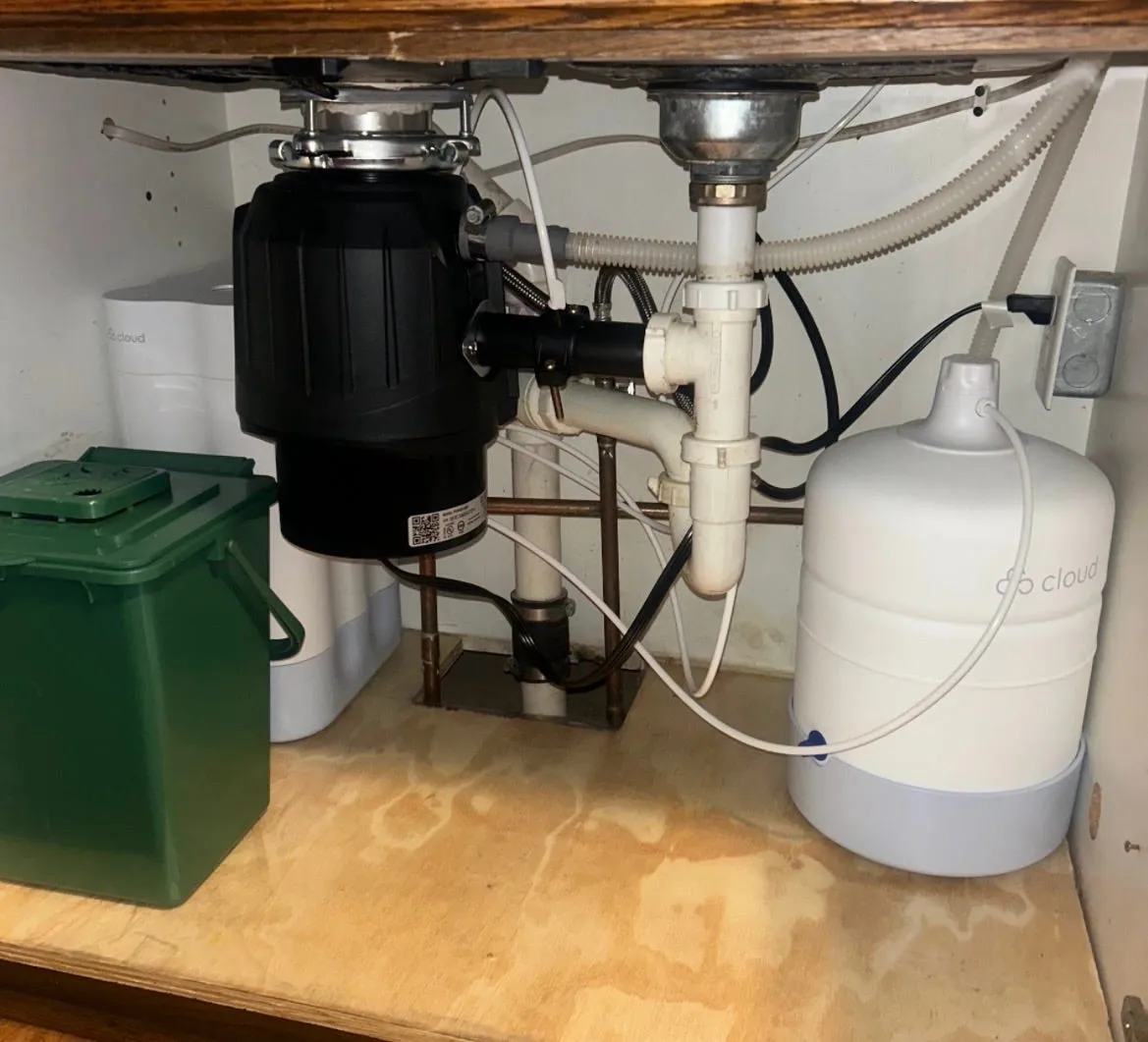
Happy (and safe) drinking!
Hunter


