It is customary in many Asian, Middle Eastern, Indian, and African cultures to remove shoes before entering the house.
One reason is hygiene. A lot of daily life happens on the floor in these cultures, from eating at low tables to sleeping on futons, so the floor has to stay clean. You don’t track the street across the surface you eat and sleep on.
The other reason is respect. Taking your shoes off acknowledges that the home is a different, cleaner kind of space, and you’re choosing to meet it on its terms. You’re not dragging the noise and grime of the outside world into someone’s sanctuary. There’s a humility in it, too. At Buddhist temples, you remove your shoes before stepping into the halls, an act of respect before entering a sacred space.
Genkan, “Clean Zone.”
The entryway in Japanese homes is called the genkan.
It didn’t start as a place for shoes. Genkan is written with two characters, gen (mysterious, profound) and kan (gate, barrier). It began as a Zen Buddhist term for the threshold to a temple, the metaphorical “gateway to profound knowledge” that a monk passed through to begin training.
And passing through it was no small thing. When a would-be monk showed up at a Zen monastery asking to be admitted, he wasn’t just let in. He had to stand in the entrance hall, bowing, sometimes for two full days, while the monastery tested whether he was serious. The ritual even had a name: niwazume. The entrance was the trial. You proved your respect before you were allowed inside.
Over time, the word came down out of the temple. By the 17th century, during the Edo period, samurai borrowed genkan for the formal entrance halls of their own residences, often with a raised ceremonial step (the shikidai) to mark status. A proper genkan became a privilege of the warrior class and the nobility. Commoners weren’t allowed one.
That only changed with the Meiji Restoration, when the old feudal class restrictions were abolished and, for the first time, ordinary families could build a genkan into their homes. A feature that began as a sacred Zen threshold, then became a samurai status symbol, finally became something everyone had by their front door.
What the genkan actually is.
Today, the genkan sits just inside the front door. It’s a purpose-built, sunken space, set lower than the rest of the house, specifically to keep dirt confined to it.
It has two distinct zones. You step in at street level onto the lower section (the tataki), traditionally packed earth or stone, treated as essentially an extension of the dirty street. Then there’s a single deliberate step up onto a raised ledge (the agarikamachi), and crossing it puts you into the actual home, where the floor changes to polished wood or tatami. Being invited up past it means you’re a trusted guest, not just a visitor.
Turns out most of the world is shoes-off at the door.
Japan is one of the clearest examples because the architecture is so explicit about it, but this is the global norm. China, Thailand, Turkey, much of Scandinavia, large parts of Eastern Europe... shoes off, often slippers on. Many of these homes have a built-in entry zone for exactly this purpose.
The U.S. and parts of Western Europe are the outliers, and it’s worth asking why.
So what’s actually on your shoes?
Back in 2008, a microbiologist named Dr. Charles Gerba at the University of Arizona ran a study on what lives on footwear. He found an average of 421,000 units of bacteria on the outside of a shoe and 2,887 on the inside.
Coliform bacteria, which originate in fecal matter, showed up on all but one of the shoes tested. Coliforms were on 96% of the shoes, and E. coli specifically on 27% of them.
Where do fecal bacteria on your shoes come from? Gerba’s take was that it most likely comes from public restroom floors or from animal waste outdoors. Bird droppings, dog waste, the stuff you don’t even notice you stepped in on the sidewalk.
He also found a few other species on the shoes. Klebsiella pneumoniae, a common cause of wound and bloodstream infections and pneumonia, and Serratia ficaria, a rare cause of respiratory and wound infections.
In Gerba’s study, the transfer of bacteria from the shoes onto clean tiles ranged from 90% to 99%. In other words, walk across your just-mopped kitchen floor in outdoor shoes, and you’ve basically undone the mopping.
He actually tested this directly on clean tile. He found that 90 to 95 percent of the bacteria transferred to the tiles, and sampling every footstep, he could still find plenty of organisms 10 to 20 steps in.
It’s not just bacteria either…
Lead. Studies have shown that in urban areas with older homes, lead in dust gets tracked inside on the surface of shoes. Lead in the soil from decades of leaded gasoline and old paint becomes dust on the sidewalk, sticks to your soles, and comes inside. Researchers who study indoor contaminants have found a strong connection between the lead inside a home and the lead in its yard soil.
Lawn and garden chemicals. Research published in Environmental Science & Technology found that common lawn herbicides like 2,4-D and dicamba get tracked indoors on the soles of shoes and remain in carpet dust, with scientists projecting the chemicals would persist in the home up to a year after being tracked in. In a study of 578 California homes, detection rates in carpet dust were over 90% for glyphosate, 2,4-D, and simazine, and concentrations rose the closer a home was to agricultural pesticide use.
WOW.
Once all of this (bacteria, heavy metals, herbicides) is ground into your floors and carpet dust, it becomes a daily low-dose exposure: gut and respiratory infections from the bacteria, neurological damage from the lead, and a chemical body burden that accumulates quietly over months and years.
If you have small children, it’s even more important.
Who spends A LOT of time on the floor? Babies and kids do.
Children spend more time on the floor than adults, especially crawling and in the toddler years, and their small size creates a larger proportional body burden. Kids bring their hands to their mouths as many as 80 times an hour.
So the contaminant lands on the floor, the crawling baby’s hands land on the floor, and the hands go into the mouth. The floor is the exposure pathway.
The fix is simple.
A no-shoes rule is one of the highest-leverage, lowest-cost things you can do for your indoor environment.
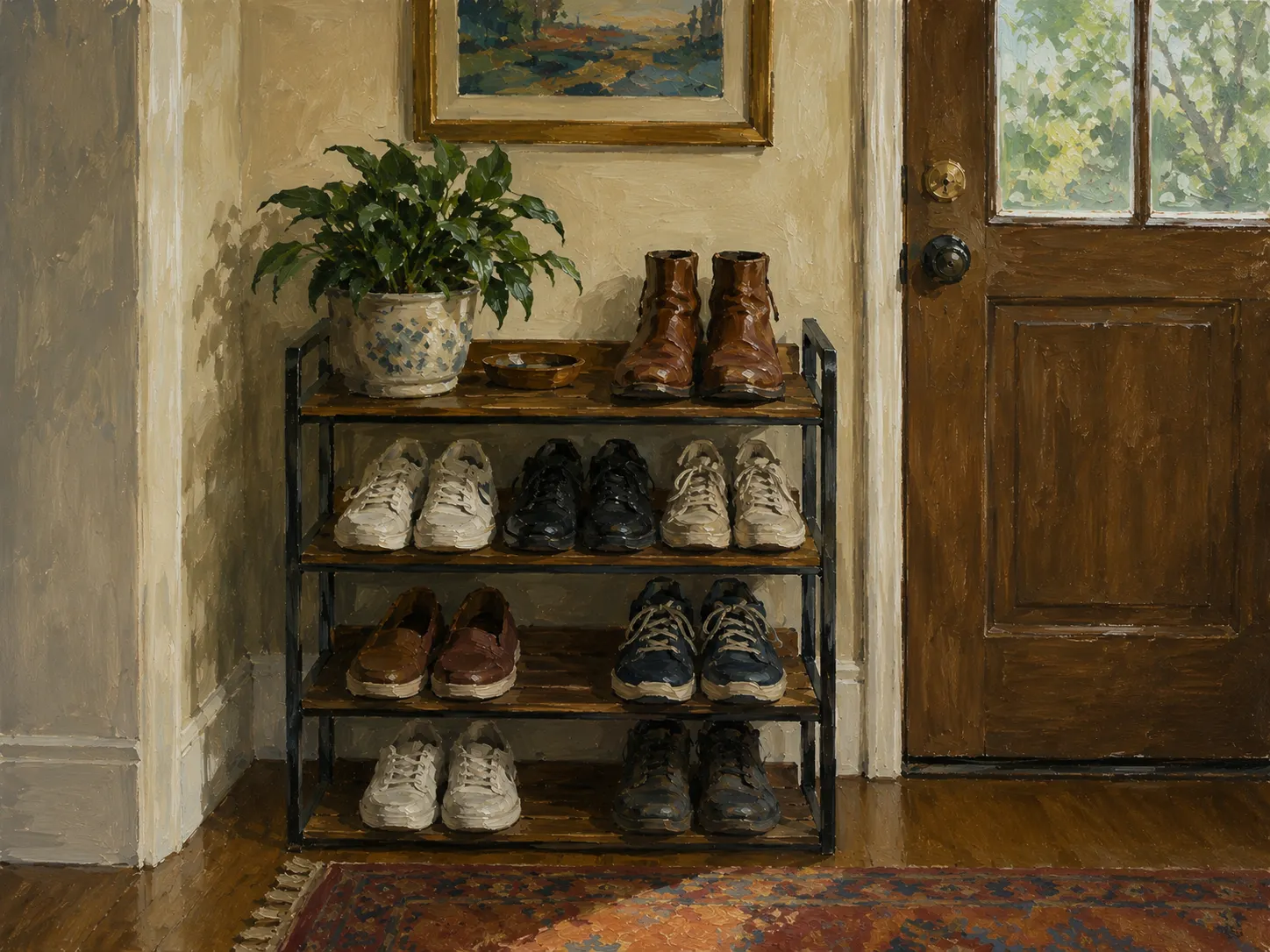
- Shoes off at the door. It helps to design the entryway to make this easy to remember. Place a bench or a tray right at the entry so it’s the path of least resistance. If you come through the garage, consider keeping your shoes there. Ask guests to remove them too!
- House slippers and slipper-socks by the door. In Minnesota, cold feet in the winter are a challenge. Get a dedicated pair of slippers (Bombas has super comfortable ones) that never go outside.
- HEPA vacuum on the floors regularly. For whatever does get in, especially if you have carpet, a good HEPA vacuum is your friend. Those lawn chemicals live in carpet dust, so the carpet is where to focus.
But what about the dog?
Think about where a dog goes. Breck walks through the grass, on the sidewalk, digs up my backyard, and goes to doggie daycare. Then he comes inside…
What we do for Breck:
- Paw wipes by the door. A bowl of water and a towel, or grooming wipes, right at the entry. A quick wipe of all four paws (and his belly when it’s wet or muddy) knocks down most of what he’d otherwise track across the floor. Wiping paws before they come in is the single most-recommended fix in the research.
- We avoid lawns with little flag markers. Those small “application” signs mean a fresh treatment. We just route the walk around them, and never use chemicals on our lawn.
- His beds and blankets get washed often. Whatever does make it inside concentrates where he sleeps. Hot wash, regularly.
- HEPA vacuum the lounging spots, not just the floors. The couch corner he’s claimed, the rug by the door. That’s where the dust load is highest.
Try your best!
Take your shoes off and stay a while,
Hunter
We built a bunch of FREE resources for you!
- Take our home health quiz (~5 min)
- View a recent home assessment report
- Try out our indication guide to lead pipes
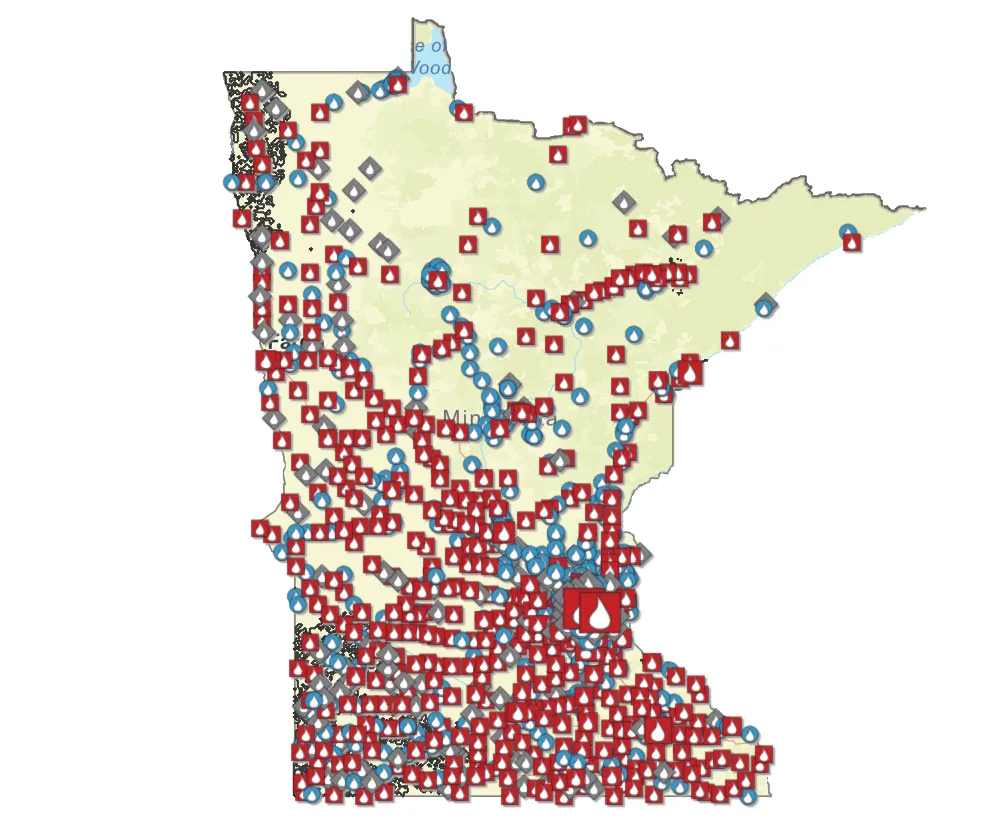
- See your radon risk with our Minnesota radon map
- Calculate what the best air purifier is for your home from our database
- Schedule a free 15 minute chat with our founder about any questions you have