On April 25th, 2014, the city of Flint, Michigan, switched its drinking water source. For decades, Flint had purchased treated water from Detroit, which drew from Lake Huron. The Flint city government was nearly bankrupt and under state-appointed emergency management, so to save money while a new pipeline was being built, they switched to drawing water from the Flint River.
Now the Flint River water wasn’t the actual problem…Detroit’s water had been treated for decades with a corrosion-control additive called orthophosphate. Over time, the orthophosphate had formed a protective mineral scale on the inside of every lead pipe in the system, including the ~10,000 lead service lines running into Flint homes. When Flint switched sources, they did not continue the orthophosphate treatment. Without it, the Flint River’s naturally more corrosive chemistry started stripping the protective scale right off the inside of the pipes. Lead started leaching into the water of about 140,000 people.
It took 18 months for anyone in authority to admit what was happening. The two people who forced the issue were Dr. Marc Edwards, a Virginia Tech engineer who tested residential water samples (one of his samples came back at over 1,000 ppb, almost 70 times the EPA action level of 15), and Dr. Mona Hanna-Attisha, a Flint pediatrician who pulled the blood lead data on local children. Hanna-Attisha found that the percentage of Flint kids under five with elevated blood lead had doubled after the switch. In some neighborhoods, it tripled.
About 9,000 children under the age of six were exposed, and it took over a decade to finally get back to normal. As of July 2025, the city has completed the pipe replacement program required by the settlement agreement. In total, workers excavated more than 28,000 pipes and replaced nearly 11,000 lead pipes in Flint.
Lead pipes are still in the ground.
The EPA currently estimates there are about 4 million lead service lines in active use across the United States (2025).
A lead service line is the pipe that runs from the water main in the street to your house. It was the standard material for residential connections from the late 1800s through about 1950, and it remained legal in many places until the federal ban in 1986.
The other thing worth knowing: our broader water distribution infrastructure is old. The U.S. has about 2.2 million miles of underground water pipes. The average pipe in the ground is 45 years old, with cast-iron sections in some cities pushing past a century. The American Society of Civil Engineers graded U.S. drinking water infrastructure a C- in their 2025 report card, and estimated we need $625 billion over 20 years just to get it to a state of good repair.
The system we are working with is old, and lead is still around.
Locally, here’s what that looks like.
Minnesota has roughly 90,000 lead service lines statewide. The state has committed to replacing all of them by 2033.
- Minneapolis: about 40,000 lead service lines.
- Saint Paul: about 17,000 lead service lines (~18% of properties).
- Duluth: about 7,700 lead service lines.
The federal goal, set by the 2024 Lead and Copper Rule Improvements, is for every lead service line in the country to be replaced by 2037.
Why I care, and why you should.
Lead is a neurotoxin. There is no safe level of exposure. The EPA’s maximum contaminant level goal for lead in drinking water is zero, which is the agency’s way of admitting that any amount is harmful.
For adults, chronic lead exposure raises blood pressure, decreases kidney function, and is associated with reproductive issues. For children, it causes lowered IQ, behavioral problems, slowed growth, hearing damage, and anemia.
Children are a part of this, which is scary. They absorb lead at a much higher rate per pound of body weight than adults. The CDC’s blood lead reference level for kids is 3.5 µg/dL, and even below that threshold, the developmental effects are real and permanent.
How lead actually gets into your water.
Lead doesn’t dissolve into water at the treatment plant. It dissolves into it on the last leg of the journey, after it leaves the main and runs through whatever metal it touches on its way to your glass.
The three places it comes from:
- The service line. The pipe between the water main and your house. If it’s lead, it’s the dominant source.
- Internal plumbing. Lead solder was the standard for joining copper pipes until 1986. Brass fixtures (faucets, valves) were allowed to contain up to 8% lead until 2014.
- Aerators. The little mesh screen at the tip of your faucet collects lead particles over time. Most people never clean theirs.
Whether lead actually leaches depends on the chemistry of the water. The variables that matter most:
- pH and alkalinity. Acidic water (low pH) and water low in minerals (soft water) is more corrosive. Flint’s switch to corrosive Flint River water without corrosion control is what triggered that crisis.
- Temperature. Hot water leaches more lead. This is why every recommendation tells you to use cold water for drinking, cooking, and especially baby formula. Boiling does not remove lead; it concentrates it.
- Stagnation. Water sitting in pipes overnight or over a long weekend has more contact time and accumulates more lead than water that’s just been flushed.
The fix: orthophosphate
The good news and reason we don’t hear more about lead poisoning from water systems is because of the chemical orthophosphate.
Orthophosphate is added to water at the treatment plant, which works by reacting with lead at the pipe surface to form an insoluble mineral coating. Picture a thin crust on the inside of the pipe that physically locks the lead in place. As long as the chemistry holds, the lead stays put.
Most older U.S. cities use some version of this approach now. It’s cheap, it’s recognized as safe by the FDA, and when it works, it works really well. Minneapolis adds it. So does Saint Paul. So do most water systems with significant lead infrastructure.
But it does not go without its own challenges.
The first problem is that the coating is fragile. If anything in the water chemistry shifts (a change in disinfectant, a change in source water, a drop in dosing for budget reasons), the coating destabilizes and lead can spike.
The second problem is physical disturbance. Ground tremors from construction, partial pipe replacements, or even a hard pressure surge can flake off the protective coating.
The third problem is the health impact. Some studies do suggest that there are dangers when consuming phosphates at a high level. Since phosphates are entirely absorbed by the gastrointestinal tract, elevated phosphate intake could damage blood vessels, induce aging, increase the risk of cardiovascular diseases, and lead to a higher mortality rate in those with renal disease.
So what should you do?
Find out if you have a lead service line.
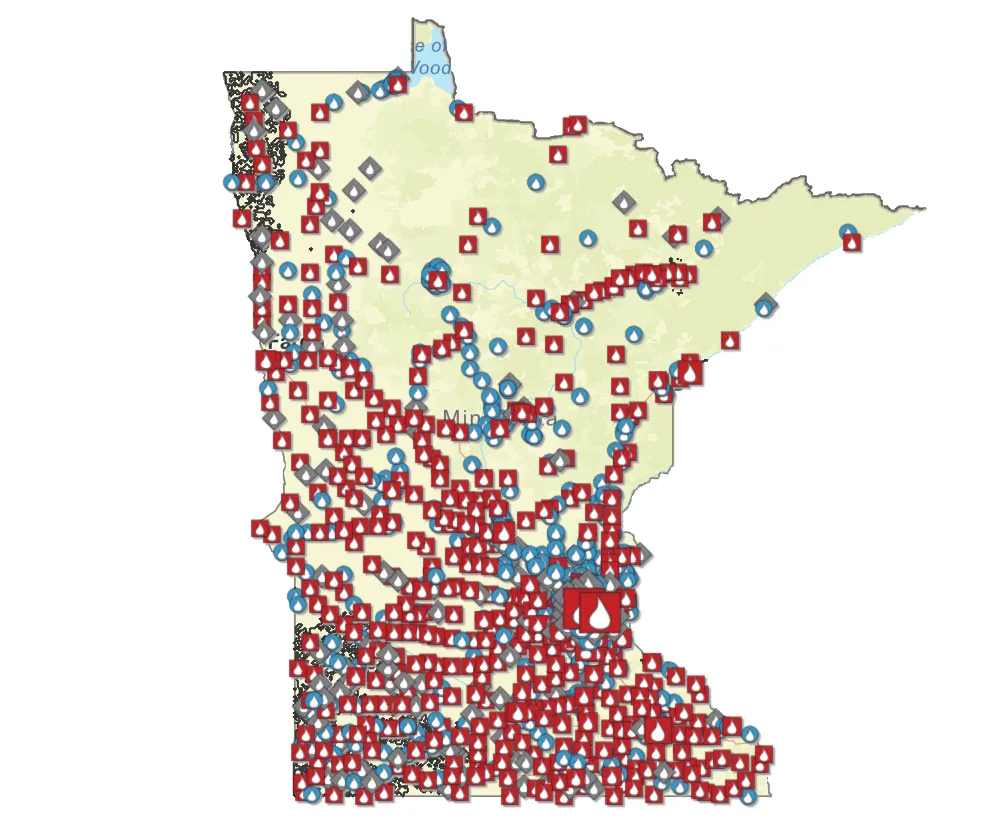
Most major cities have published their lead service line inventories. You can usually search your address directly. Minnesota: maps.umn.edu/LSL/ (statewide map maintained by MDH and the University of Minnesota).
I have also developed a quick guide to check physically for yourself. All you need is a magnet and a coin. You can use the tool here.
Test, then filter.
Once you know if you have a lead service line, then I would test your tap water, and from there, decide on a filter.
The bottom line.
Lead in drinking water is one of those problems where the regulatory framework is slowly grinding toward a fix (every U.S. lead service line replaced by 2037, if the funding holds). The chemistry workaround buys time. It doesn’t eliminate the risk. And the chemistry can fail.
So, look up your service line. Test your water. Filter what you drink.
Wishing you clean water,
Hunter
We built a bunch of FREE resources for you!
- Take our home health quiz (~5 min)
- View a recent home assessment report
- Try out our indication guide to lead pipes
- See your radon risk with our Minnesota radon map
- Calculate what the best air purifier is for your home from our database
- Schedule a free 15 minute chat with our founder about any questions you have